ISSN: 1941-4137
POETRY THAT ENACTS THE ARTISTIC AND CREATIVE PURITY OF GLASS
POETRY THAT ENACTS THE ARTISTIC AND CREATIVE PURITY OF GLASS
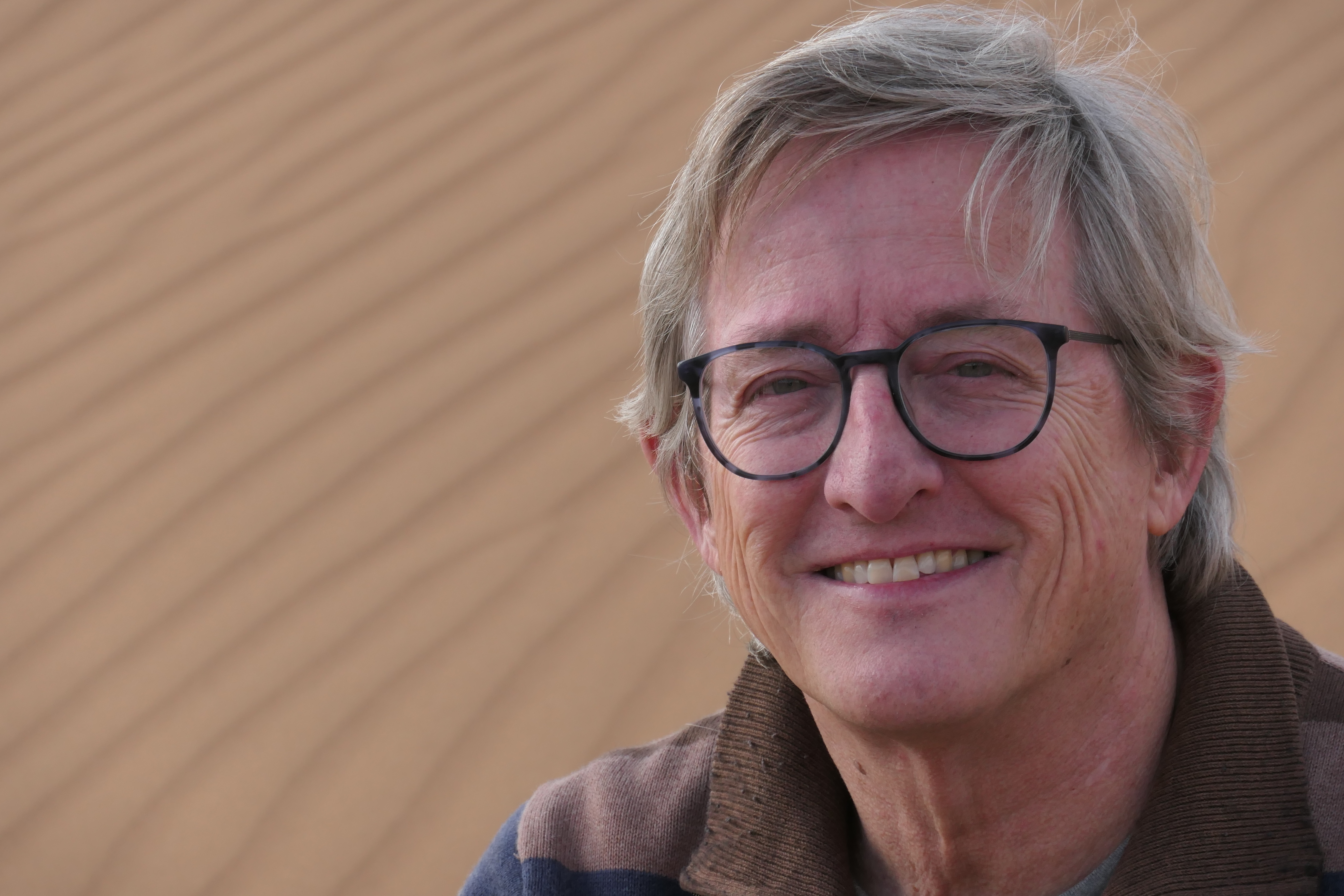
Craig Martin Getz left LA for Barcelona in 1989. He's an English teacher at an international school. Poetry and photography are his two ongoing passions, plus travelling with his husband, Spanish poet and novelist, José Ramón Ayllón Guerrero.
Craig's poetry has appeared primarily in the US, but in the UK, Spain and Chile as well, in the following print or online journals: DIAGRAM, Mastodon Dentist, Blue Earth Review, Barcelona INK, Emerge Literary Journal, Subliminal Interiors, The Gorilla Press, Agave Magazine, Wilde Magazine, Northwind Magazine, Your Impossible Voice, The Missing Slate, The Tishman Review, Assaracus, Nimrod International Journal, Toho Journal, Parentheses, Quaranzine, Angel Rust Magazine #5 & #9, Poem of the Month at Cafe Writers (UK), and more recently in the Ware Poets Anthology 2024 (UK), The Branches (May 2025, NYC), and Dream Catcher (July 2025, York, UK).
His poetry-videos form part of his artistic expression. In February 2026, "The Dam, the Remake" is to be shown at Poetry Film Club Bristol, England.
More poetry-videos can be viewed on his website.
April 22, 2026
Radio Hopi
From somewhere over the bluff
the radio signal comes and goes;
just what I was hoping for, being
an ambassador of sorts at this wheel.
See? They’re there.
East on Highway 98, north on Interstate 160;
everywhere has been the Navajo Nation
for several hours and will continue to be so
well into tomorrow. From my home abroad,
I glance at website after website of tribal tension,
aware that the verb glance is a gross
simplification, as if opening Windows might
freshen the memory of an ignored heritage
which, by extension, is part of my body,
a country I’m barely aware of.
Words add up and zooming out on the map,
I come to the conclusion that size matters.
From somewhere over this bluff to our right,
between dips that stretch and allow
the Hopi signal to get out of the miniscule
reservation engulfed by the Navajo’s, there’s
a faint drumming on hide, a breathy-heaving
of elderly men, channeled through
this 4-door, horse-powered Ouija board.
They’re there; their
rough chorus filling the interior of the car
with onomatopoeia for gods
in Hopi
the length of a curvature in this landscape;
this land I come back to and will forever
try to own despite the shit, my origin
for it’s where I too came into being,
descendant of an extra-terrestrial invasion
before spaceships were ever invented,
but long after the hierarchy of civilizations
laid down the blueprint for housing tracts;
who gets the dream home, who gets to dream
about home. With settlements spelled out
in Roman alphabet, American flags pop up on this
infinite maze of Maples and Mains, asphalt on earth,
but the steep-faced bluff rises up
and I’ll be damned, it’s "Free Bird"
on a stronger frequency. The weaker station
gets lost and I find refuge in a memory:
a slow dance at a middle school make-out party
with a girl, Lynrd Skynrd and bubble-gum perfume:
If I leave here tomorrow, would you still remember me?
though my chakras were somewhere between
the feathered one and the heavy-hammered
construction worker of the Village People
Merv Griffin gifted me with at the dinner table.
And despite us not slowing down, cruising
over the speed limit ‘cos I’m as free as a bird now,
this landscape yields a yawn,
and is gone. A Hopi woman is speaking now,
that we’ve been listening to an old recording
of a chant an anthropologist made in 1925,
with a probable agenda of academic racism,
a bent on Linneus’ binomial nomenclature,
but she doesn’t get into that now,
interspersing Hopi phrases when English fails.
Interstate 160, meseta of sage; this gaping mouth
in the landscape opens something in me,
to bring my own mother back from the dead
in surprising clarity. The radio woman
is going on about the importance of Kachina
for their people, and the Kachina dolls my mother
had her kids make, back east, at a Quaker school,
stand on the dash next to the windshield
of time;
faint drumming on hide, a breathy-heaving
imploring rain, the anthropologist explains, in 1925.
In the future, on the other side of the world,
I find some of their stories online:
“How the Deer Got Their Red Eyes”,
“How the Twin War Gods Stole the Thunder-Stone”,
“How Bees Learned to Fly and How Peaches Became Sweeter”
among others;
but if I may, the driver of this car, simply say
Kachinas do what dolls should do: steer us
towards Compassion, towards Magic,
towards building a home on the corner of both
a lifelong challenge. That day when
I visited my mother’s school, I didn’t feel
the sadness, the pain, but the teepee had room
for two small people. Detergent bottles,
toilet paper tubes, fleshed with papier-mâché,
dressed in bright tempera,
Halloween orange, Thanksgiving yellow, a parade
of totems, each being able to stand
on its own two legs, silently
passing down tales of the cosmos
around a bonfire of oblivion somewhere out west,
free as a bird now.
"Radio Hopi" belongs to my 6th poetry collection Camino which I hope to publish soon. It brings together two collections of poetry in a broad contemplation of identity, culture, aging, sexuality, family, love and loss with The United States as a point of reference, a road movie of sorts, in dialogue with my chosen life abroad in Barcelona, Spain. "Radio Hopi" contemplates the co-existence of the Hopi people, as well as other Native Americans, alongside later inhabitants of the land.
Glass: A Journal of Poetry is published weekly by Glass Poetry Press.
All contents © the author.
All contents © the author.