ISSN: 1941-4137
POETRY THAT ENACTS THE ARTISTIC AND CREATIVE PURITY OF GLASS
POETRY THAT ENACTS THE ARTISTIC AND CREATIVE PURITY OF GLASS
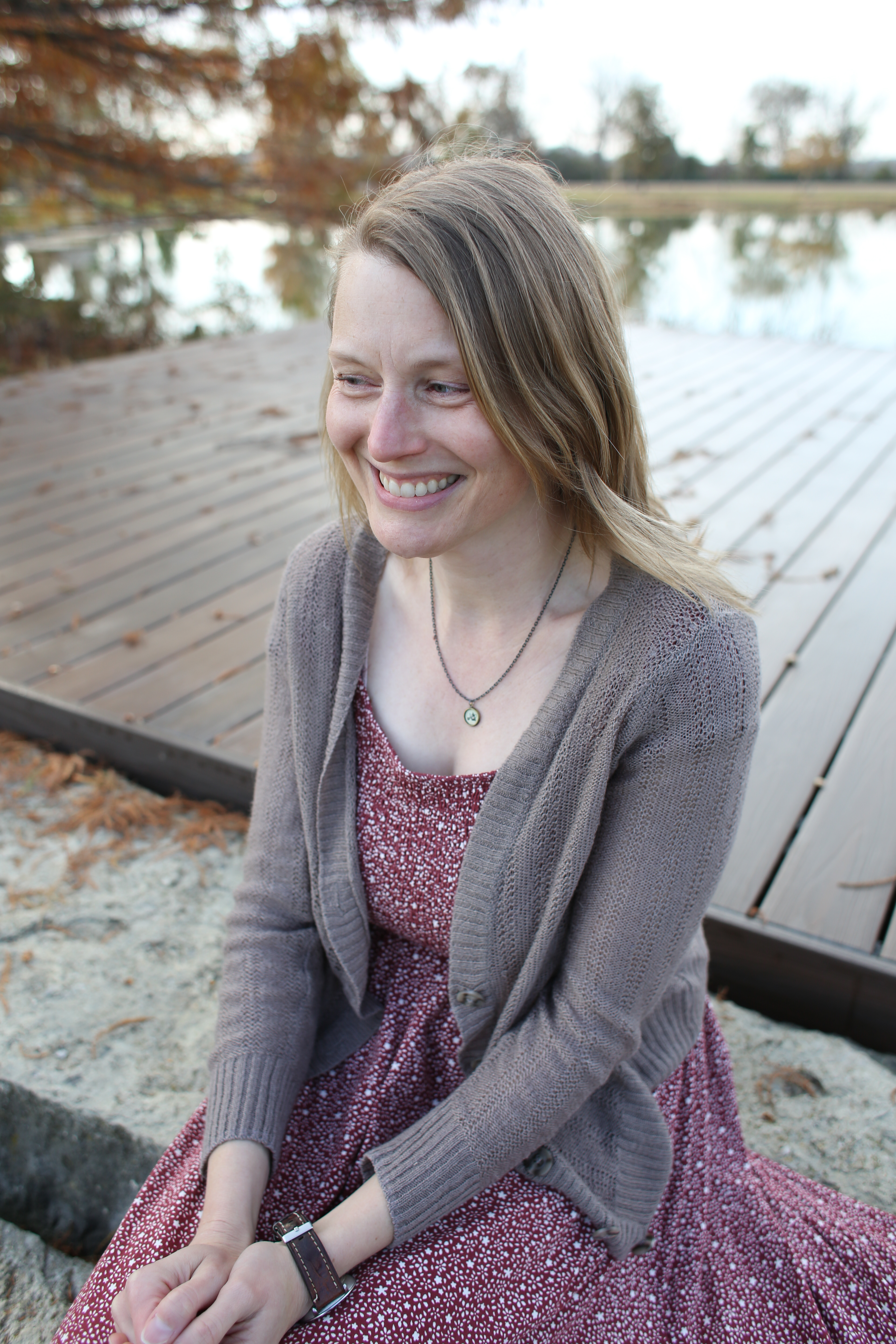
Melissa Fite Johnson is the author of three poetry collections, most recently Midlife Abecedarian (Riot in Your Throat, 2024). Her work has appeared in Ploughshares, Pleiades, Southern Review, Poet Lore, Diode, and elsewhere, and has received a special mention for the Pushcart Prize. Melissa, a high school English teacher, is a poetry editor for The Weight Journal for high school students, and the co-founder of a new pop culture-centered journal, Forget Cool. She and her husband live with their dogs in Lawrence, KS.
Also by Melissa Fite Johnson:
Midlife Abecedarian
Green
Footnotes to My Dialogue Journal with My Teacher, Third Grade, Spiral Notebook
September 23, 2026
Nothing to See Here
No sea to hear, just flat Kansas plains. Middle of somewhere,
a girl’s T-shirt once said, and I smiled as we crossed paths
in our small Midwest town. I loved that T-shirt
as much as I hate my mother’s that says Life is good,
because she doesn’t mean it, it’s just nice to say.
Like Thank God. Middle of somewhere reminded me
of my uncle the artist who once visited from Providence,
which I might write even if it weren’t true, the symbolism
too perfect. But that’s where he lived, what he gave me
while his wife and my mother — sisters — fought. To escape,
we took a drive. When I apologized for the plain plains,
believing the Kansas flyover myth, he called it
the bluest sky he’d ever seen. He went on and on about
wheat fields. I couldn’t name one beautiful thing in my life,
but he wanted to paint every abandoned barn. Something to see here.
Traci Brimhall and I were once interviewed for a local Kansas public television series, and we were each asked to bring a poem to read. Traci thought it made sense to read the poem she wrote as Kansas Poet Laureate, and I agreed. I love that poem — beautiful and expansive, told in first person plural. It took me a moment to realize I also had a Kansas poem. I wouldn't have thought to categorize "Nothing to See Here" that way, because it's so personal. I actually think if I'd been given the assignment to write a Kansas poem, there's no way this is what I would've come up with. But our poems made sense in conversation with each other that day, and it occurred to me there's more than one way to write a love poem to a place. I really do feel at home now, both in my state and in my own skin, and it took a long time for me to get here. This poem means a lot to me, and I'm so grateful it too has found the right home.
Glass: A Journal of Poetry is published weekly by Glass Poetry Press.
All contents © the author.
All contents © the author.