ISSN: 1941-4137
POETRY THAT ENACTS THE ARTISTIC AND CREATIVE PURITY OF GLASS
POETRY THAT ENACTS THE ARTISTIC AND CREATIVE PURITY OF GLASS
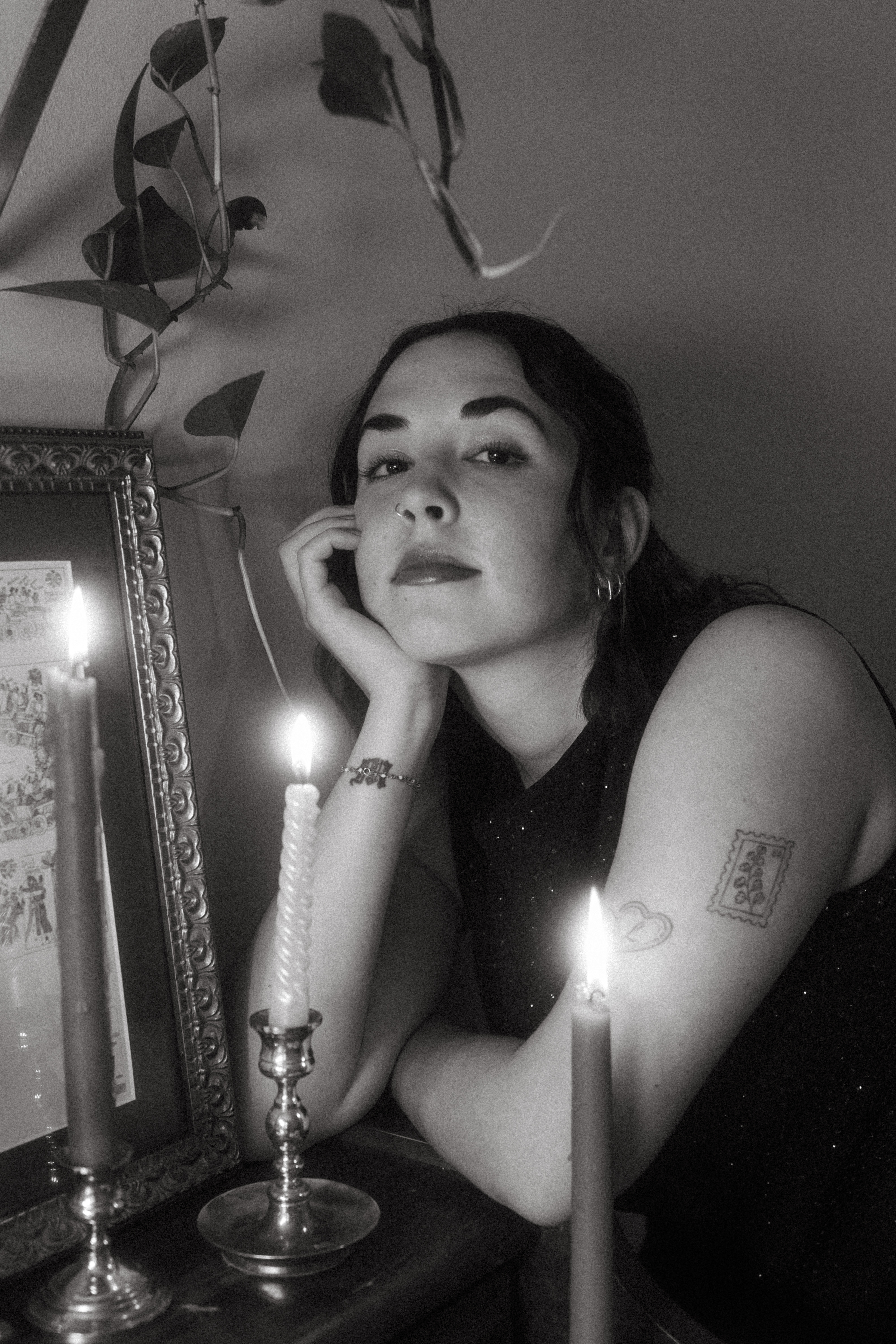
Kayla Rutledge Page has an MFA in fiction from North Carolina State University. She is the recipient of the statewide 2019 James Hurst Prize for Fiction from NC State University and the winner of the Baltimore Review's 2024 winter flash fiction contest. Her work has appeared in SmokeLong Quarterly, Fractured Lit, Ninth Letter, the Baltimore Review, and elsewhere. She lives in Raleigh, North Carolina and is represented by Kendall Berdinsky at Dystel, Goderich & Bourret.
October 22, 2025
Detour
At church, a woman tells me surgeons opened her chest
to fix a backwards heart. The glass face of a martyr weeps rain.
I realize when the pastor prayed, I only bowed my head.
Scholars argue for women deacons because we have record
of two being tortured to death. Since I heard that
I have tried not to forget them. Holy women, did your life,
quick, dovelike, heart backward, go up like a prayer?
Woolf knew something I am too short to reach. Dante said our life, our life,
and saw himself in every damned face, and passed on.
I don’t want to write things that make sense anymore. I want to realize
ringed eternity. I want to unthread.
I live, most days, as though waiting for a diagnosis.
I live this morning: a burst pipe, brake lights,
blanket of water weighing the roadway
like a polished tray.
The names of the two deaconnesses referenced in this poem are lost. I heard the story in a sermon; it was not until after the poem's writing that I discovered the women were also enslaved. They are mentioned in a letter of Pliny the Younger to the Roman emperor, which reads: "They [that is, the Christians] asserted, however, that the sum and substance of their fault or error had been that they were accustomed to meet on a fixed day before dawn and sing responsively a hymn to Christ as to a god... [...] Accordingly, I judged it all the more necessary to find out what the truth was by torturing two female slaves who were called deaconesses. But I discovered nothing else but depraved, excessive superstition." This account does not say the women were tortured to death, though that is what I remember hearing, and are not enslavement and torture both deaths of their own kind? The quote from Dante is from the first line of Canto 1 of Inferno, "Midway upon the journey of our life / I found myself within a forest dark, / For the straightforward pathway had been lost." Reading it, I was struck by the plurality. Our life, which cannot be separated from the lives of those we abuse, torture, forget in our very backwards, unstraightforward hearts. A woman really did tell me once her heart was backwards. I assume she is alright now; I never got to talk to her again.
Glass: A Journal of Poetry is published weekly by Glass Poetry Press.
All contents © the author.
All contents © the author.