ISSN: 1941-4137
POETRY THAT ENACTS THE ARTISTIC AND CREATIVE PURITY OF GLASS
POETRY THAT ENACTS THE ARTISTIC AND CREATIVE PURITY OF GLASS
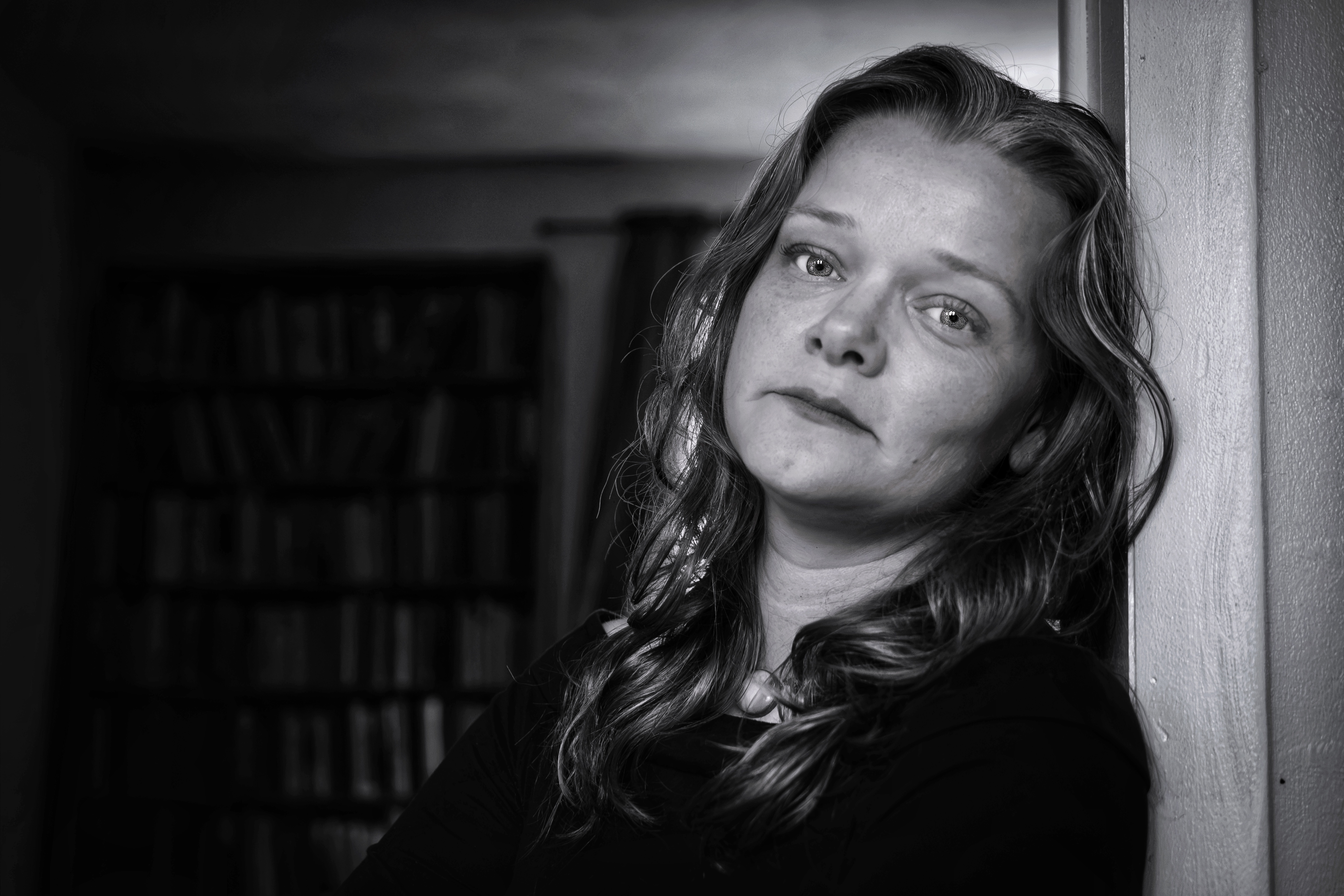
Melissa Jørgenrud Helton is Literary Arts Director of Hindman Settlement School, a cultural nonprofit in Knott County, Kentucky. Her work has been published in Shenandoah, Women Speak, Still: The Journal, Anthology of Appalachian Writers, Norwegian Writers Climate Campaign, and more. Her chapbooks include Inertia: A Study and Hewn, and her first full length collection is A Middle-Aged Woman Rages. She is editor of the anthology Troublesome Rising: A Thousand-Year Flood in Eastern Kentucky and Untelling, the literary and arts magazine of Hindman Settlement School. She is also series editor for the Seedbed series under the Swallow imprint of Ohio University Press. Her work has been supported through the Kentucky Foundation for Women, and has been awarded the George Scarbrough Poetry Prize, the Emma Bell Miles Nonfiction Prize, has been nominated for Best of the Net, and once won her a piece of key lime pie. She has been honored with the Mildred Haun Award of Excellence and designation as a Kentucky Colonel, and she is a dual citizen in the United Kingdom.
Canon
The tree swallow babies hinge
open their yellow mouths
and yell for their momma to return
to their hanging house
in the dogwood. I want to step up
a step ladder and read
them Fahrenheit 451,
The Immortal Life of Henrietta Lacks,
all the queer Appalachian poetry
collections on my shelf.
I don’t need to warn them,
these fragile little birds, away from humans
like I do my own babies.
How do you deduce which humans
are actually humans and which
are monsters, pretending?
Such an old story. A story told
before words were able to tell stories.
The first story we ever
told, and probably the last.
This poem began while watching some birds in my yard while I was feeling distraught with the world and how I could possibly prepare my children for it. I felt jealous of the mother bird, who did not have such concerns. Her offspring only needed food and to learn the skills birds have always had to learn. Human children have a rougher go of it because the humans (and human-made systems) in their world are clouded by the ability to lie, manipulate, extort, and abuse. I thought there is no need to explain the danger and valor of humans to these baby birds, but that is one of the most important jobs for human parents. We start with telling simple fairytales as a way to teach these lessons, and the lessons only become more nuanced and entangled from then on.
Glass: A Journal of Poetry is published monthly by Glass Poetry Press.
All contents © the author.
All contents © the author.