ISSN: 1941-4137
POETRY THAT ENACTS THE ARTISTIC AND CREATIVE PURITY OF GLASS
POETRY THAT ENACTS THE ARTISTIC AND CREATIVE PURITY OF GLASS
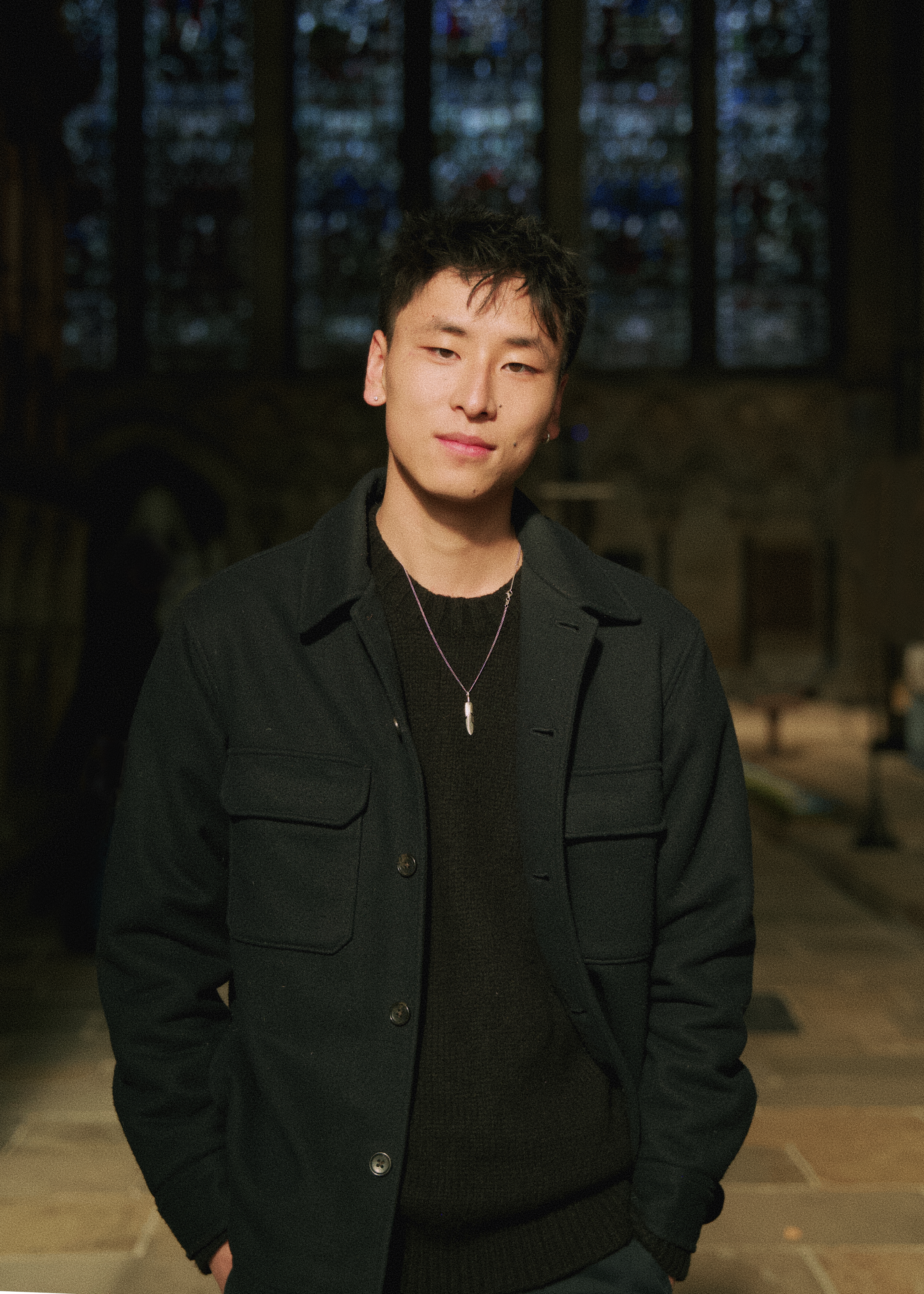
Derek Chan is an MFA graduate of Cornell University, where he was a university fellow, an editor of EPOCH journal, and a two-time recipient of the Corson-Browning Poetry Prize. Additionally, he holds a First-Class Honors in Literary Studies from Monash University, where he received the Arthur Brown Thesis Prize. His work has appeared or is forthcoming in New England Review, Best of Australian Poems, Oxford Poetry, The Margins, and elsewhere. He was a finalist for the 2024 Forward Prize, the 2025 Tin House residency, and he has been nominated for Best New Poets. He has also received fellowships from the Vermont Studio Center, and has been recognized for awards by Adroit Journal, Frontier Poetry, and Palette Poetry. He is currently a lecturer at Cornell University, where he teaches creative writing and academic composition.
Also by Derek Chan:
A Craft Talk on the Praxis of an August Evening
My father who could hold seven plates on his arms
Fieldwork
Previously in Glass: A Journal of Poetry:
Inheritance
Meditation on Mid-Election Day
A particular bird
in blur
this morning.
A particular
consideration
in my feeling
of a color
in the flexion
of an exalted song.
Some say it’s enough.
These notations
extracted
from the afterlife.
Arranged from fricatives
& fictions,
diadems & difference.
Winter falling
from the leaves,
& not a question
of power.
One thing
that flares into two.
Two that is swiftly three.
They dissolve the sense
through acts
of sensation, suddenness
in seedheads.
Through my window,
glistening off the eaves,
the shadow
of a sparrow
is neither
“in” nor “out.”
Do they know it is going
to snow, it was snowing
all afternoon
while it was purpling
under my eyes,
while the old songs
were in transit,
while laws were
being chambered,
while poets sutured
the soldiers,
while maples broadcasted
the latest deaths
in color,
some distant,
some linear, some pointillistic,
some raking gutters —
What does it say?
Whatever the eye
takes in.
The price of milk.
The price of gas.
Ecstatic variations
on sameness
vibrating in a sun
-wrapped skull.
It says, “there is no
amphitheater grander
than your din
-swept air.”
It says, “the purity
of the blaze
is a pantomime.”
Not a question
of power,
but an aptitude
for pain.
The birds perching
on prison fences,
bus-stops, school-yards,
in the eyes
of children, there’s nothing
out there
they are,
& nothing in here
they will be.
As if from certain angles,
what we see
recedes to appear —
A wedding-dress
in a walled-in
windstorm.
Republics
of presidents
pale as morsels
unperishing.
An arrangement
of stars staining
terrors exalted
in teeth.
Could I name it,
I’d have wasted
my life
disfiguring light
into letters,
reinscribing
rainfall at the edge
of dread, growing grasses
over graves
like shadows
on speed-dial.
The particularity
of the blur
which matters, which
keeps the world
in matter.
More than an orbit,
a revolution
of shirt-tails,
a paradise of cross-talk
among moss
& leaf-mold,
an edge-like entry
into the oblivion
of a rose
-coded Thou.
Never can I
describe it, the leaves
blowing past me,
this long blue light
like arms wet with sweat
crossed towards
a single trellised cry —
Be with me, among
the bending
of asphodels,
the bruised stalks
of my “I”
feeling out a voicing,
not a voice.
Flotillas of “we.”
The width of “we.”
The chorus
in the cremations of “we.”
No vanishing
point in vapor trails
of newly scorched vowels,
in the singing line
drawn through the human,
the continuous protest
of a tulip’s
unreckoned shadow,
our vertical attempts
at heaven
while we wait
at vending machines,
traffic-stops,
consoling an enemy
recited behind
mirrors, while
the mirror itself
stands
in harmony
with the mirror —
Does it take place
in you, will you
tell me
where it is?
Luminous as our god
-long hours,
as gas dripping
from a man's
trembling hands,
as sparrows
crying
over five-miles
of asphalt, touching
the cries
of a woman
shuddering
in the back seat,
where inside all
her billowing, a blur.
So is this the world?
Or the one we are in?
Glass: A Journal of Poetry is published monthly by Glass Poetry Press.
All contents © the author.
All contents © the author.